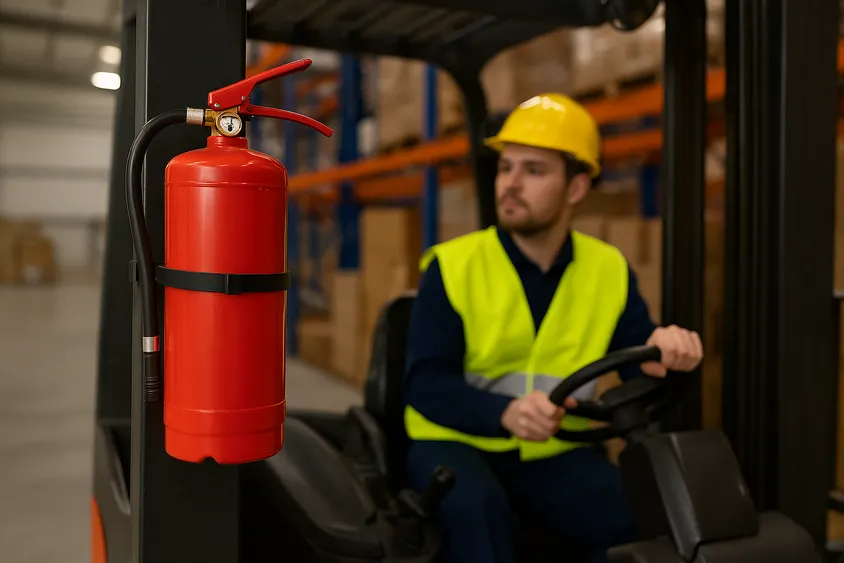
Let’s cut straight to it: OSHA doesn’t come right out and say “every forklift must have a fire extinguisher.”
That’s where all the confusion comes from.
But here’s the part most folks miss—forklifts deal with enough fire hazards that many workplaces, state agencies, insurance companies, and even fire inspectors basically expect extinguishers to be mounted on them.
I’ve been around forklifts for years, and trust me: if you’ve ever swapped a propane cylinder and smelled even a little leak, you know exactly why having an extinguisher within arm’s reach feels like the smart move.
So while the rule isn’t black-and-white, the real-world answer is a lot more interesting.
Let’s break it down in a way that actually makes sense.
OSHA’s Actual Rule (And Why People Misread It)
A lot of people assume OSHA has a specific forklift rule about extinguishers.
Nope. Not exactly.
The main OSHA standard is 29 CFR 1910.157, which talks about portable fire extinguishers in the workplace. It says employers must:
- Provide extinguishers where fire hazards exist
- Make sure employees can access them easily
- Provide training if employees are expected to use them
- Match the extinguisher type to the type of fire hazard
What it doesn’t say is:
“Every forklift must have an extinguisher mounted on it.”
But here’s the catch—
OSHA doesn’t write rules for every single situation. They expect employers to evaluate hazards and place extinguishers wherever they’re needed. And forklifts are mobile ignition sources. They run on fuel, work around flammables, and operate in tight areas where a fire can spread fast.
So OSHA’s thinking is basically:
“If there’s a fire risk, you need an extinguisher nearby—whether that’s on a wall or mounted on the truck itself.”
This is why many safety officers still require extinguishers on forklifts even though OSHA didn’t spell it out word-for-word.
However, there are relevant federal laws governing the use and provision that must be followed. Here they are:
Ready to Rev Up Your Career With Forklift Certification?
Get Certified Online & Be Job-Ready Today! It's Fast & Easy!
With our online course, getting certified is as easy as clicking, learning, and succeeding.
Don't let another day go by without taking the next step in your career.
Related Laws Requiring the Provision of Fire Extinguishers
When it comes to fire protection, several national and state-level regulations guide when and where fire extinguishers must be provided—including situations involving forklifts.
1. OSHA 29 CFR 1910.157 – Portable Fire Extinguishers
OSHA’s 29 CFR 1910.157 is the main standard dealing with portable fire extinguishers in the workplace.
This regulation requires employers to:
- Provide portable fire extinguishers where employees are expected to use them.
- Install the appropriate type of extinguisher based on the fire hazards present.
- Develop a Fire Prevention Plan and an Emergency Action Plan if extinguishers are offered for employee use.
- Maintain and inspect extinguishers regularly.
While OSHA does not specifically require fire extinguishers to be mounted on forklifts, the standard emphasizes that extinguishers must be readily accessible wherever fire hazards exist.
Since forklifts often operate around flammable liquids, LPG cylinders, fuel storage areas, charging stations, and warehouse combustibles, having an extinguisher on the truck itself can satisfy OSHA’s requirement for accessible extinguishers in high-risk zones.
In other words:
➡️ Even though OSHA doesn’t explicitly say “put a fire extinguisher on a forklift,” the risk environment often makes it a practical compliance measure.
2. Texas Requirement – SORM RMTSA Vol. III, Section Two, Chapter 6, Subchapter 6.18
If you’re operating in Texas, the rules are much more explicit.
The State Office of Risk Management (SORM) states in its Risk Management for Texas State Agencies (RMTSA) manual that:
- Powered Industrial Trucks (including forklifts) must be equipped with a portable fire extinguisher.
- The extinguisher must be mounted in a visible and easily accessible location.
- The extinguisher must match the likely class of fire for the environment (Class B for flammable liquids, Class C for electrical fires, etc.).
- Operators must be trained on how to use the extinguisher properly.
Texas is one of the few states that directly mandates extinguishers on forklifts, not just in the workplace.
3. NFPA 505 – Fire Safety Standard for Powered Industrial Trucks
The National Fire Protection Association (NFPA) also provides guidance.
NFPA 505 (2006 edition and current editions), paragraph 9, recommends that:
- Forklifts should have a portable fire extinguisher to reduce potential fire damage.
- The extinguisher should be mounted in a location recommended by the forklift manufacturer, ensuring quick access without obstructing controls or visibility.
NFPA codes are not federal laws, but many insurance companies, safety auditors, and local jurisdictions adopt them—making them influential in fire safety compliance.
4. Additional OSHA Requirements Based on Fire Hazards
Even if OSHA doesn’t spell out extinguisher requirements per forklift, it does require extinguishers in workplaces where fire hazards exist.
Forklifts themselves create those hazards:
- Gasoline-powered forklifts: risk of fuel leaks or ignition.
- Diesel forklifts: still involve flammable liquids.
- LPG (propane) forklifts: involve pressurized, flammable gas cylinders.
- Electric forklifts: battery charging can cause hydrogen gas buildup, sparks, or electrical fires.
OSHA 1910.178 (Powered Industrial Trucks) also notes that employers must protect workers from fire hazards during refueling, recharging, and maintenance.
Having an extinguisher on the truck aligns with OSHA’s fire hazard control expectations.
5. Industry Best Practices (Widely Adopted)
Even when not legally required, many companies choose to install extinguishers on forklifts because:
- OSHA inspectors often expect extinguishers in high-hazard areas.
- Insurance providers may require them to reduce fire-related claims.
- Safety programs (especially in warehouses and chemical facilities) classify forklifts as mobile ignition sources.
- FM Global and other major insurers recommend extinguishers on powered industrial trucks.
Common extinguisher types for forklifts:
- 2.5 lb or 5 lb ABC dry chemical → most common choice
- BC dry chemical → for flammable liquid environments
- CO₂ extinguishers → occasionally used where residue must be avoided
Forklift Manufacturers That Originally Fitted Their Trucks with Fire Extinguishers
If the forklift manufacturer equips its truck with a fire extinguisher, the employer shall maintain and check the extinguisher, making it readily available and in good use whenever needed. The employer shall not modify the forklift, alter its function and remove any equipment that could hamper the safe use of the truck without written consent or authorization of the original manufacturer.
Other OSHA Requirements
- OSHA requires inspection of fire extinguishers installed in the workplace every month. Employers shall document its maintenance inspection on a regular or annual basis. Each fire extinguisher must be attached with an inspection tag, and label its inspection date accordingly to make a record of it.
- OSHA requires the mounting/installation of fire extinguishers in designated heights to make them accessible to employees. Portable fire extinguishers must be mounted in cabinets or braces, 3.5 feet to 5 feet above the floor surface. If the extinguishers are larger carrying more weight and volume, they must be placed 3 feet above the floor.
- OSHA requires that the fire extinguisher must be easily identified in the workplace. There are chances that they are blocked from view, and materials and equipment in the workplace could block them from being displayed. It is a good practice to put a sign, symbol or mark making it recognizable by people.
Selection of Appropriate Extinguisher
When selecting an appropriate fire extinguisher for a forklift, the most important factor to consider is the type of fuel used by the forklift. The following are the most common types of fuel used in forklifts and the appropriate fire extinguisher for each:
- Gasoline: Gasoline is a flammable liquid and is typically used in internal combustion engines. In the event of a fire, a Class B fire extinguisher, specifically designed for flammable liquids, would be the most appropriate type of fire extinguisher to use.
- Propane: Propane is a flammable gas and is commonly used as a fuel source in forklifts. A Class B fire extinguisher would be the most appropriate type of fire extinguisher to use in the event of a fire.
- Electric: Electric forklifts are powered by batteries and are not typically fueled by flammable liquids or gases. However, electrical fires can still occur due to short circuits or other electrical malfunctions. In the event of an electrical fire, a Class C fire extinguisher, specifically designed for electrical fires, would be the most appropriate type of fire extinguisher to use.
It's important to note that some fire extinguishers are multi-purpose and can be used on multiple classes of fire, so be sure to choose a fire extinguisher that is appropriate for the type of fuel used by the forklift and any other potential fire hazards in the area.
Types of Fire Extinguishers Suitable for Use on Forklifts
| Extinguisher Type | Suitable Fire Classes / Common Uses | Not Suitable For | Advantages | Notes for Forklift Use |
|---|---|---|---|---|
| Dry Chemical (ABC Type) | Class A, B, C fires (general combustibles, flammable liquids, electrical) | — | Versatile and effective on most workplace fires | Most common extinguisher installed on forklifts |
| CO₂ (Carbon Dioxide) | Class B and Class C fires | Not for Class A fires | Leaves no residue; safe for electronics | Good for electric forklifts or battery charging areas |
| Water Mist | Class A and safe on Class C | Not for Class B fires | No residue, gentle on equipment | Great for warehouses with sensitive products |
| Halogenated (Halon / Halotron) | Class B and C fires | Not for Class A unless rated | Fast suppression, no residue | Ideal for protecting costly machinery; more expensive |
How to Choose the Right Extinguisher for a Forklift
| Scenario | Recommended Extinguisher | Why |
|---|---|---|
| Forklift handles flammable liquids (oil, gasoline, solvents) | Dry Chemical (ABC) or Halotron | Effective on Class B fires |
| Forklift used around electrical panels, chargers, or wiring | CO₂ or Water Mist | Won’t damage electrical components |
| Warehouse with sensitive products (electronics, food, pharmaceuticals) | Water Mist or Halotron | No corrosive chemical residue |
| General-use forklift in a mixed-material warehouse | Dry Chemical (ABC) | Best all-purpose extinguisher |
What Rating Fire Extinguisher for Forklift?
The appropriate fire extinguisher rating for a forklift depends on the types of potential fires that could occur in the environment where the forklift is used. Generally, forklifts operate in areas where flammable liquids (like hydraulic oil) and electrical equipment are present, suggesting a need for extinguishers rated for Class B (flammable liquids) and Class C (electrical equipment) fires.
A common recommendation is to use an ABC-rated fire extinguisher. This type of extinguisher is versatile and can handle:
- Class A fires involve common combustibles such as wood, paper, and cloth.
- Class B fires involve flammable liquids like gasoline, oil, and hydraulic fluid.
- Class C fires involves electrical equipment, which is especially relevant for electric-powered forklifts or any forklift with electrical systems.
The size and specific rating of the fire extinguisher should align with the specific risks associated with the forklift's operation and the environment it's used in. For example, a larger capacity extinguisher (e.g., 5 lb or more) might be recommended in areas with a higher risk of fire. Always consult with safety regulations and guidelines specific to your region or industry to ensure compliance and adequate protection.
What is the Best Fire Extinguisher for Electric Forklifts?
For electric forklifts, the best fire extinguisher type is often an ABC-rated dry chemical extinguisher. This is because electric forklifts, like all electrical equipment, can potentially be involved in electrical fires (Class C), as well as fires involving ordinary combustibles (Class A) and flammable liquids (Class B). An ABC-rated extinguisher is versatile and capable of addressing all these types of fires, making it a suitable choice for environments where electric forklifts are used.
However, for areas or industries with specific risks or where the highest safety standards are required, consider the following additional recommendations:
- For Electrical Fires: Class C-rated fire extinguishers are essential. The ABC dry chemical extinguisher is effective here, but for environments with sensitive electronic equipment, a CO2 (carbon dioxide) or clean agent extinguisher (like Halotron) might be preferred. CO2 and clean agent extinguishers do not leave residue, which is beneficial for protecting the electronic components of the forklift and other nearby sensitive equipment.
- Special Considerations: In some cases, based on the specific risks associated with the operation environment or materials handled, other types of extinguishers might be recommended as additional protection. For instance, if a forklift is used in an area with a high volume of flammable liquids, a specific Class B extinguisher in addition to an ABC extinguisher might be advisable.
When selecting a fire extinguisher for an electric forklift, consider the following:
- Size and Weight: Ensure the extinguisher is of a manageable size and weight for quick and easy use.
- Accessibility: Mount the extinguisher in a location on the forklift where it is readily accessible in case of an emergency.
- Maintenance: Regular maintenance and inspections are crucial to ensure the fire extinguisher remains operational when needed. This includes checking the pressure gauge, seal, and physical condition of the extinguisher.
Lastly, training forklift operators and other employees on how to use the fire extinguisher correctly is crucial for effective emergency response. Regular drills and training sessions can help ensure everyone knows what to do in case of a fire.
Benefits of Having Fire Extinguishers on Forklifts
- Quick Fire Response: Having a fire extinguisher right on the forklift means you can jump into action immediately if a fire starts. This quick response can stop a small fire from turning into a big disaster.
- Boosts Safety Awareness: When fire extinguishers are visible on forklifts, it reminds everyone in the workplace to think about safety. It's like having a constant reminder that safety comes first, making everyone more careful and aware of potential fire hazards.
Drawbacks to Consider
- Limited Space: Forklifts aren't exactly spacious, and adding a fire extinguisher takes up valuable room. This could make things a bit cramped for the operator or limit how much the forklift can carry.
- Keeping Them Ready: Fire extinguishers need to be checked and maintained regularly to make sure they work when you need them. This means someone has to take the time to inspect them often, which can be a bit of a hassle.
Placement of Fire Extinguishers
Fire extinguishers are a crucial component in any fire safety plan, and it's important to place them in an easily accessible location on a forklift. Here are some guidelines for placing fire extinguishers on forklifts:
- Visibility: The fire extinguisher should be placed in a location that is easily visible to the operator and anyone else in the vicinity of the forklift. This will make it easier for them to locate and access the extinguisher in the event of a fire.
- Accessibility: The fire extinguisher should be mounted in a location that is easily accessible to the operator while they are seated on the forklift. This can be achieved by mounting the extinguisher on the side of the forklift or on a bracket attached to the forklift's mast.
- Secure Mounting: The fire extinguisher should be securely mounted so that it does not fall off or become dislodged during normal operation of the forklift. This can be achieved by using a bracket or strap to secure the extinguisher to the forklift.
It's important to follow local regulations and guidelines when placing fire extinguishers on forklifts, as well as to train forklift operators on the proper use of fire extinguishers.
Provision of Fire Extinguisher Training
The provision of fire extinguisher training for forklift operators is essential to ensure that they are prepared to respond in the event of a fire. The following are some of the key topics that should be covered in fire extinguisher training for forklift operators:
- Types of Fire: Forklift operators need to understand the different classes of fire and the appropriate type of fire extinguisher to use for each class.
- How to Use a Fire Extinguisher: The operator should be trained on how to properly use a fire extinguisher, including how to aim the nozzle, how to discharge the extinguisher, and how to use the fire extinguisher until the fire is completely out.
- Fire Safety Procedures: The operator should be trained on the proper fire safety procedures, including how to evacuate the area in the event of a fire, how to call the fire department, and how to use the fire extinguisher safely.
- Maintenance of Fire Extinguishers: The operator should be trained on the importance of regular maintenance of fire extinguishers, including how to check for proper pressure, how to check for leaks, and how to report any issues with the fire extinguisher.
Forklift operators need to receive regular fire extinguisher training, as well as regular refresher courses, to ensure that they remain knowledgeable about fire safety and the proper use of fire extinguishers. This training can be provided by the employer, a fire safety consultant, or a fire extinguisher manufacturer.
Implementation Strategies for Employers
-
Picking the Right Fire Put-Out-Thingy for Your Forklift: Look for a fire extinguisher that's easy to handle, not too heavy (about 5-10 pounds), and matches the kind of fires you might get in a forklift, like electrical or fuel fires. The label should say "ABC," meaning it's good for most types of fires.
-
Teaching Your Crew How to Use Fire Extinguishers and Act in Emergencies: Make sure everyone knows how to use the extinguisher — remember PASS (Pull the pin, Aim low, Squeeze the handle, and Sweep side to side). Also, run through what to do if there's a fire, like where to go and who to call, at least a couple of times a year.
-
Keeping Fire Extinguishers on Forklifts Ready and Checked: Check your fire extinguishers every month to make sure they're not damaged and the pressure gauge shows a full charge. Once a year, have a pro give them a thorough check-up. If it's been 5-10 years, you might need to replace them or get them refilled, even if they've never been used.
To Make a Conclusion
Fire extinguishers are required on forklifts to ensure that in the event of a fire, rapid response can be taken to prevent the spread of the fire and minimize damage. The regulations and standards set by organizations such as OSHA and NFPA, as well as state and local regulations, make it clear that fire extinguishers are a necessary component of a fire safety plan for forklifts.
When selecting an appropriate fire extinguisher for a forklift, it's important to consider the type of fuel used by the forklift and choose a fire extinguisher that is appropriate for the type of fire that may occur.
Proper training for forklift operators on the use of fire extinguishers and regular maintenance of the fire extinguishers are also crucial to ensure that they are ready to use in the event of a fire.