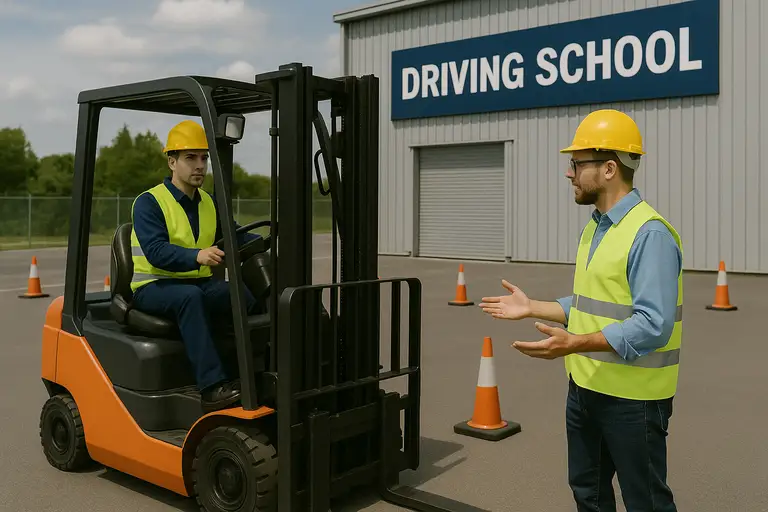
If you’ve been Googling “forklift driving school near me” or “where can I get forklift certified,” you’re definitely not alone. A ton of people look this up every single day—either because they want a better-paying job, they just got hired at a warehouse, or their boss told them, “Hey, you need to get certified before I let you touch that forklift.”
And honestly?
Getting certified is way easier than most people think. Forklift training isn’t like going back to school for months. Most courses are just a few hours to a couple of days, depending on your experience. You learn, you drive, you pass—and boom—you walk out with your certification card in your wallet.
Let me walk you through it all so you know exactly what to expect and how to find the best forklift driving school near you.
Do You Really Need Forklift Certification? (Yep, You Do.)
A lot of people think driving a forklift is just like driving a little car with forks on it. It’s not. You’re lifting heavy loads, driving in tight aisles, and working around people who are walking all over the warehouse. That’s why OSHA—basically the workplace safety police—says every forklift operator must be properly trained and evaluated.
So yes, getting certified isn’t optional.
If your job requires you to operate a forklift, even just once, your employer must send you to training or accept a valid certification you already have.
Good news?
A forklift school will teach you everything you need to know: safety, skills, hands-on driving, and how not to flip the truck (trust me, that’s a real thing).
Ready to Rev Up Your Career With Forklift Certification?
Get Certified Online & Be Job-Ready Today! It's Fast & Easy!
With our online course, getting certified is as easy as clicking, learning, and succeeding.
Don't let another day go by without taking the next step in your career.
Where Can You Take Forklift Certification Near Me?
There are lots of places where you can get certified. The best ones are usually the trade schools or local colleges close to you. They have programs that let you take the exam and get certified fast.
Click the state where you are located to see listings of training schools where you can take forklift certification training.
If You Live in Another Country
In other countries such as Australia, forklift driving schools are commonly referred to as registered training organizations (RTO). The RTO serves as a provider of vocational education and training to students who want to take nationally recognized training. RTO could be a privately owned company or a government-run institution.
In the UK, before a driving school can operate a business, it should first be accredited by one of the accrediting bodies: Road Transport Industry Training Board (RTITB), Construction Industry Training Board (CITB), Lantra National Training Organisation Ltd. (LANTRA), Independent Training Standards Scheme and Register (ITSSAR), Association of Industrial Truck Trainers (AITT) and National Plant Operators Registration Scheme (NPORS).
As previously mentioned, employers can receive training onsite for their workers. Having the forklift training conducted in the actual workplace, it makes it more flexible to alter the training curriculum to correspond with the prevailing conditions of the workplace.
| Canada | Australia | United Kingdom |
Advantages of Enrolling in Forklift Driving School
Employers who use forklifts in their operations are required to provide proper safety training to all forklift operators. Completing this training offers several important benefits:
Training for Beginners
Training schools offer programs specifically designed for newcomers. If you’re just starting your career as a forklift operator—or simply want to learn how to operate a forklift safely—these beginner courses will give you the essential knowledge and hands-on skills you need to get job-ready quickly.
Skill-Upgrading for Experienced Operators
For operators who already have experience, many schools offer advanced courses, including refresher training, train-the-trainer programs, and leadership development. These programs help experienced operators upgrade their skills and advance their careers.
Helps Employers Avoid OSHA Fines
Proper training also protects employers from costly penalties imposed by regulatory agencies such as OSHA. Sending workers to an accredited training school ensures compliance with safety rules and regulations—and reduces the risk of violations during inspections.
Maintain Documentation for Compliance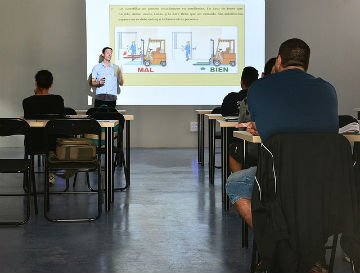
Employers must also keep accurate training records. When OSHA or another regulatory inspector visits the workplace, these documents serve as proof that employees have been properly trained. Without this documentation, employers may be cited for non-compliance.
Option for On-Site Training
Employers can choose to conduct forklift training directly at their workplace. By arranging on-site training, the school sends an instructor who tailors the program to the actual working conditions, employee behavior, and existing safety procedures. This is often the most effective training method because it addresses real-world hazards.
Job Placement Assistance
Some training schools or career centers also help graduates find work after completing their forklift training. They often partner with job agencies or local employers, making it easier for certified individuals to secure employment. Choosing a school that offers job placement assistance can give you a strong advantage in the job market.
Online Certification Options
Some private training companies also offer online forklift certification. While online learning is convenient, it does have limitations—especially the lack of hands-on practical training. Still, for people with tight schedules or limited availability, online training can provide a flexible option to complete the classroom portion of the certification.
What to Look for in a Good Forklift Schools or Classes?
If you want to make sure you’re getting your money’s worth when choosing a forklift training school, here are a few things to look out for:
- Pick a class with fewer students.
Small classes make a huge difference. When there aren’t too many people, it’s quieter, the instructor isn’t overwhelmed, and you get more one-on-one attention. In a crowded class, it’s easy to feel lost or left behind. Go for a smaller group so you can actually learn and get the support you need. - Look for a school with modern equipment and a solid training facility.
The environment you train in matters. Updated classrooms and new forklift models make learning easier, safer, and more realistic. If you want to be sure the school is legit, ask if you can visit the campus and take a quick tour. Most places will say yes, and you’ll get a feel for how they operate. - Match the training to the job you’re aiming for.
If you already saw a forklift job ad you’re interested in, check the requirements. Make a quick list, then ask the school if their training covers those skills. A reputable training center should be able to prepare you for the exact job you want. - Choose a school that offers career help or job placement.
A good forklift driving school won’t just teach you how to operate the machine—they’ll also help you land a job afterward. Some schools even have partnerships with local companies and can refer you directly once you’re certified. That’s a major bonus. - Find a school close to home.
The closer the training center, the easier your life will be. Long commutes can be tiring and expensive. If there’s a forklift certification school near your area, that’s almost always the best choice.
Of course, sometimes the perfect training facility isn’t right next door. Prices can vary depending on the course type, how long it lasts, and where the school is located. The best way to know if a school is right for you is simple: reach out, ask questions, and see what they offer. A quick phone call or visit can tell you everything you need to make the right decision.
Different Types of Forklift Certifications to Choose From
| Training Type | Who It’s For | Duration | Typical Cost | What’s Included |
|---|---|---|---|---|
| Beginner / Novice | Total beginners | 1–3 days | $300–$600 | Theory + full hands-on practice |
| Experienced Operator | Operators with experience but no certification | 3–5 hours | $150–$250 | Evaluation + refresher practice |
| Refresher / Renewal | Operators renewing 3-year validity | 1–3 hours | $75–$150 | Basic review + evaluation |
| Online Theory + In-Person Practical | Anyone who wants flexible training | 1–2 hours online + driving test | $50–$150 | Online class + in-person evaluation |
When it comes to forklift certifications, there are a few different types that you can choose from. There are two basic types of forklift certifications:
- Forklift Operator Certification - This certification is the most common type of certification and is given to an individual who intends to operate a forklift truck. The operator must be at least 18 years old to apply for this certification and be physically fit.
- Forklift Instructor Certification - This certification is given to those who want to be an in-house trainer of the company. Completion of this course enables you to deliver the training and certify workers in the workplace.
Where Can You Take Free Forklift Training & Get a License Near You?
If you’re trying to get forklift certified without spending money, your best bet is actually a community college near you. A lot of community colleges offer free or low-cost forklift training for local residents, especially if they partner with workforce development programs.
Why community colleges?
Because many of them receive grants to help people learn job-ready skills—forklift training included. That’s why they often provide the course for free or at a heavily discounted rate.
To find out if your local community college offers forklift classes:
- Visit their website
- Check their workforce development or continuing education section
- Or simply drop by the campus and ask—someone will point you in the right direction
When you inquire, make sure to ask:
- What are the requirements?
- Are there upcoming schedules?
- Can you register early? (You definitely should—spots fill up fast!)
If the main campus is too far, don’t worry. Most community colleges have satellite offices or small outreach centers scattered around the area. You can visit one of those to ask about forklift training requirements and registration.
Can You Get Free Forklift Training Online?
Yes, you can find free forklift training online—but here’s the thing: it only covers the classroom part of the training. You can watch videos, read safety guidelines, and learn all the basics like how forklifts work, the rules you need to follow, and common hazards to watch out for. It’s a great way to get familiar with everything before you ever touch a forklift.
But… there’s a catch.
Free online training does NOT make you certified.
To actually get your forklift license, OSHA requires two things:
- Classroom or theory training (this part can be done online)
- Hands-on driving + an in-person evaluation (this part can only be done in person)
So online training is helpful if you just want to learn the basics or refresh your knowledge, but it won’t give you the certification you need for a job. You still have to show up in person, drive the forklift, and pass the practical test.
Bottom line?
Free online forklift training is a good starting point—but if you want a real forklift certification card that employers accept, you’ll need to complete the hands-on portion at a forklift driving school or training center.
Free Online Training vs. Paid Official Certification
| Free Online Training | Paid Certification Training |
|---|---|
| Covers classroom/theory topics | Covers theory + practical driving |
| Convenient, self-paced | Structured training with instructor |
| Good for refresher knowledge | Required for OSHA-compliant certification |
| No hands-on training | Includes hands-on forklift operation |
| Not valid for certification | Provides official forklift license card |
Community College vs. Trade School: Which One Would You Choose
Before you sign up for forklift training, it’s worth asking yourself: Should I take my classes at a community college or a trade school?
Both options can get you certified, but they’re pretty different in how they train you and what they offer afterward. Knowing the difference helps you choose the one that fits your goals.
How They Differ in Programs Offered
Community colleges offer a wide variety of programs—not just forklift certification. If you want to build a long-term career in equipment operation, community colleges often have heavy equipment operation programs that go beyond forklifts. So if you’re thinking, “Maybe I want more than just forklift driving,” a community college gives you room to grow.
Trade schools, on the other hand, focus on specialized, hands-on skills. They’re designed for people who want job-ready training fast. Their forklift programs are usually more focused and practical, without extra academic courses.
Schedule and Enrollment Flexibility
This is where the two really differ:
Trade Schools
- Usually offer continuous enrollment
- You can start pretty much anytime
- Great if you want to get certified now and start applying for jobs quickly
Community Colleges
- Offer forklift classes periodically, not year-round
- You may have to wait for the next training cycle
- Better if you want structured, scheduled programs
Theory vs. Hands-On Training
Both schools teach theory and practical skills because OSHA requires both.
But their style is slightly different:
- Trade schools put a stronger focus on hands-on operation. You’ll spend more time on the forklift and less time in the classroom.
- Community colleges balance theory and practice and sometimes mix forklift training with broader topics like workplace skills or heavy equipment basics.
Neither is “better”—it depends on how you learn best.
Employer Connections and Job Placement
This is where trade schools often have an advantage.
Trade schools usually maintain strong partnerships with local employers. When companies need forklift operators, they often contact trade schools first. That means:
- Faster job referrals
- Better chances of immediate employment
- A smoother transition from student to worker
Community colleges may also assist with job placement, but trade schools tend to have more direct industry connections.
So Which One Should You Choose?
There’s no one-size-fits-all answer. It depends on what you want:
Choose a trade school if:
- You want quick certification
- You prefer hands-on learning
- You want a school with strong employer connections
- You want very specific, focused forklift skills
Choose a community college if:
- You want access to broader programs (like heavy equipment operation)
- You want the possibility of continuing your education
- You don’t mind waiting for scheduled class dates
- You want a more academic or structured environment
At the end of the day, both options can get you certified and job-ready. It’s all about choosing the path that matches your goals, budget, and learning style.
You Can Also Take the Class Through an Online Training Provider
I strongly encourage you not to take the forklift training through an online course as this will only tackle classroom training. This will not officially certify you even if they say you can print or download your license or certificate at the end of the course. Don’t fall to the promises of the training provider that offers such a course.
Just like the reason I mentioned above, to be a certified forklift operator, you need to take the classroom instructions, practical training, and performance assessment. This can only be done if you enroll in a course offered by a community college, vocational school, or trade center near you.
But if you still want to do the online training course, here are the advantages:
Taking forklift training online is a great option if you're busy or if there's no good training school near you. Here's the lowdown on online forklift training:
- Learn from Anywhere: The best thing about online training is you can do it from wherever you are – at home, at a coffee shop, you name it. All you need is a computer or tablet and the internet. It's like watching your favorite show but you're learning how to drive a forklift.
- Flexible Schedule: With online training, you can learn at your own pace, on your own time. If you're a night owl and learn best at midnight, go for it. It fits your life, not the other way around.
- What You'll Learn: Just like in-person classes, online training covers everything you need to know about forklifts – from safety rules and how to operate them, to all the legal stuff you need to know. It's a full course, just delivered on your screen.
- Hands-on Experience: While online courses teach you the theory, you'll still need to find a way to practice driving. Some online courses might have partnerships with local places for this part, or you might have to arrange it yourself.
- Getting Certified: After you finish the online course, you'll still need to take a practical test to get certified. The online course should prepare you for this test, but remember, you gotta prove you can handle a forklift for real.
For online courses, see this training provider we highly recommend.
How to Choose a Forklift Training School
When you're trying to find a good place to learn how to drive a forklift, choosing the right forklift driving school makes a huge difference. Here’s how to spot a solid one without overthinking it:
Make Sure They’re Legit:
First things first—check if the school is actually certified or recognized by the proper authorities. It’s basically like making sure your driver’s license comes from the DMV and not a guy printing cards in his garage.
Check What They Teach:
A good school doesn’t just show you how to move a forklift forward and backward. They should cover everything: safety rules, load handling, maintenance basics, inspections, and proper operating techniques. You want the whole package, not a shortcut.
Look at Who’s Teaching:
The instructors matter a lot. You want someone who’s got real experience, not just someone reading off a script. It’s like taking cooking lessons—you’d rather learn from a chef who actually knows their way around the kitchen.
Check the Location:
If the school is too far, you’re going to dread going. Finding something close makes everything easier, just like choosing a gym that’s on your way home so you actually show up.
Look at the Class Schedule:
Make sure the class times fit your life. If you work days, maybe you need evening or weekend classes. It’s no different from planning a movie night—pick a time you know you can actually make it.
See How Long the Program Takes:
Some schools promise super-fast certification, but faster isn’t always better if they’re skipping the important stuff. Think of it like learning to swim—you want to take your time before diving into the deep end.
At the end of the day, picking the right forklift driving school is all about doing a little homework. Choose a place that teaches everything you need, has instructors who know their stuff, and fits your schedule. Get that right, and you’ll be on your way to becoming a confident, certified forklift operator in no time.
What to Expect from Forklift Training Classes
When you sign up for forklift training classes, you’re basically getting a crash course in everything you need to drive a forklift safely and confidently. Here’s what the training usually looks like:
Classroom Time:
You’ll start with some simple classroom learning. Nothing too heavy—just the basics of how forklifts work, the rules you need to follow, and what safe operation actually looks like. Think of it like learning traffic rules, but for forklifts instead of cars.
Hands-On Practice:
Once you understand the basics, you get to jump into the fun part: actually driving the forklift. This is where you learn how to lift loads, move pallets, turn in tight spaces, and handle the truck like a pro. It’s very hands-on, and honestly, it’s where most people enjoy the training the most.
Safety Training:
Because forklifts are powerful machines, safety is a huge part of the class. You’ll learn how to avoid accidents, what hazards to watch for, and what to do if something goes wrong. It’s all about keeping yourself and everyone around you safe.
The Certification Test:
At the end, you’ll take a test—nothing scary. It just checks whether you understood the classroom lessons and can handle the forklift safely. Pass it, and you’re officially certified.
So overall, forklift training classes teach you everything from the basics to real-world driving. It’s a mix of learning, practicing, and proving your skills—everything you need to become a confident, certified forklift operator.
Final Thouhts
If you’re serious about learning how to operate a forklift and getting certified, finding the right forklift driving school is the best place to start. Whether it’s a trade school, a community college, or a local training provider, these schools are designed to teach you everything you need—from safety basics to real hands-on forklift operation.
A good forklift driving school will walk you through the entire process, help you build confidence, and prepare you for your certification test.
Once you complete your training and pass the evaluation, you’ll officially be a certified forklift operator—opening the door to better jobs and new career opportunities.
So don’t wait. Start searching for a forklift driving school near you, choose a class that fits your schedule, and take the first step toward becoming a skilled and job-ready forklift driver.
Your next career move could begin with one simple decision: enrolling in the right forklift driving school today.