If there's one question I get more than any other from new students walking into my training sessions, it's this: "Do I need to be certified to drive a forklift?"
The answer is yes — absolutely, without question.
If you ask most new operators about OSHA forklift rules, they’ll tell you:
“You just need a license to drive a forklift.”
But in real training environments, that’s not how it works.
OSHA doesn’t issue licenses — and more importantly, it doesn’t just care about passing a test.
It cares about whether you can operate safely in the actual workplace.
And in this guide, I'm going to walk you through everything you need to know about OSHA forklift training requirements, from who's responsible for your training to what happens if you skip it altogether.
Whether you're a brand-new operator trying to land your first warehouse job, or an employer building a compliance program from scratch, I want this to feel like a conversation — not a lecture. So let's get into it.
Why OSHA Forklift Certification Requirements Exist
Before we talk about what the rules are, let me tell you why they exist — because understanding the "why" makes the rules a lot easier to follow.
Forklifts are powerful machines. We're talking about vehicles that can weigh over 9,000 pounds and lift loads several times their own weight. In the wrong hands, or with insufficient training, they become one of the most dangerous pieces of equipment in any workplace.
Here are the numbers of forklift accidents I've researched:
When I look my students in the eye and share those numbers, the room goes quiet. Because it's not just statistics — it's real people who got hurt doing the exact same job you're about to do. And most of those accidents didn't have to happen.
OSHA forklift certification requirements exist to protect you, your coworkers, and your employer. That's it. The paperwork and the process are just the framework that makes the protection real.
Understanding OSHA Regulations for Forklift Training
OSHA regulates forklift operation under 29 CFR 1910.178, the standard for Powered Industrial Trucks. This is the rulebook — and everything we cover in this guide comes back to it.
Here's something that surprises a lot of my students: OSHA itself does not certify forklift operators. OSHA sets the rules and enforces compliance, but the responsibility for training and certifying operators falls entirely on the employer.
That means no government agency hands you a forklift license. No third-party online vendor can fully certify you either — no matter what their website says. Only your employer can certify you, and only after you've completed all required training components.
In OSHA's own words: "the employer shall so certify."
This is one of the most important things I teach, because there's a lot of misleading marketing out there. Online courses absolutely have a role in your training — I'll explain that shortly — but an online certificate alone does not make you a certified forklift operator.
You Might Be Asking This
If your company already has an internal forklift training procedure — and a lot of companies do — you might be sitting there wondering, "So which one do I actually follow?" Here's my simple answer: if your internal procedure sets a higher standard than what OSHA requires, stick with your internal procedure.
Think of OSHA's requirements as the floor, not the ceiling — your company can always go above and beyond, and when it does, that higher standard is the one you follow.
Eligibility Criteria for Forklift Certification
Let's start with the basics: who can actually get certified?
Age Requirement
The minimum age to operate a forklift is 18 years old. This is a federal law requirement — not a guideline, not a suggestion. It applies everywhere in the United States, with no exceptions.
Operating a forklift under 18 is a federal violation. Operating one over 18 without proper training and certification is equally a violation. Age alone is not enough — you also need to complete the full training process.
Physical and Mental Fitness
Beyond age, OSHA expects operators to have the physical capability to safely control a forklift and the mental alertness to follow complex safety instructions. If you have a medical condition that could impair your ability to safely operate the equipment, that needs to be addressed before you get behind the controls.
I always tell my students: your employer has every right — and legal obligation — to ensure you're fit to operate. This isn't personal, it's safety.
No Prior Forklift License Required
Here's something worth clarifying: there is no such thing as a traditional "forklift license" issued by the state or federal government, like a driver's license from the DMV. What exists instead is an employer-issued certification — and your regular driver's license does not count toward it. The skills and knowledge required are completely different.
The Three Core Components of OSHA Forklift Training
This is where I spend most of my time in the classroom, because this is the heart of the certification process. OSHA requires three distinct components, and all three must be completed before you're authorized to operate independently.
I like to think of these as the Three Pillars of Forklift Certification.
1: Formal Instruction (Classroom Training)
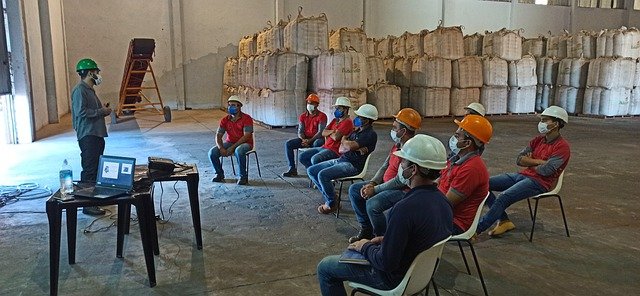
This is your foundation — the theoretical knowledge behind everything you'll do on the forklift. It can be delivered through lectures, videos, interactive computer modules, written materials, or online courses. This is the only component that can legally be completed online.
Formal instruction must cover two categories of topics:
Truck-Related Topics 1910.178(l)(3)(i):
- Operating instructions, warnings, and safety precautions for your specific type of forklift
- Key differences between a forklift and a standard automobile (and trust me, they're significant)
- Controls, instrumentation, and how they function
- Engine or motor operation
- Steering, maneuvering, and turning radius
- Visibility limitations, especially with a load on the forks
- Fork and attachment use and limitations
- Vehicle capacity and how it changes with load position
- Vehicle stability — the stability triangle is something every operator must understand
- Pre-operation inspection and basic maintenance
- Refueling, battery charging, and recharging procedures
- Operating limitations specific to the equipment
Workplace-Related Topics 1910.178(l)(3)(ii):
- Surface and floor conditions where the forklift will be used
- Load composition, weight distribution, and stability
- Load stacking, unstacking, and manipulation techniques
- Pedestrian traffic management in work areas
- Navigating narrow aisles and restricted spaces
- Hazardous or classified locations
- Ramps, slopes, and inclined surfaces that affect stability
- Enclosed environments where carbon monoxide or exhaust buildup is a risk
- Any unique hazards specific to your workplace
One thing I always emphasize: don't rush through the classroom material just to get to the hands-on part. I've seen experienced operators make avoidable mistakes because they never truly understood load stability or the stability triangle. This knowledge is what protects you when something unexpected happens.
2: Practical Training (Hands-On Instruction)
No online course can replace this — and any vendor who claims otherwise is misleading you.
Practical training must be conducted on the actual equipment the trainee intends to use in the actual work environment.
Practical training involves supervised, in-person instruction where you physically operate the forklift under the direct supervision of a qualified trainer. This includes live demonstrations, guided practice exercises, and real-world scenario simulations.
During practical training, you'll learn to:
- Perform a thorough pre-operation inspection
- Start, operate, and shut down the forklift correctly
- Handle loads safely — picking up, transporting, and placing them precisely
- Navigate your specific work environment, including loading docks, ramps, and tight spaces
- Respond appropriately to workplace-specific hazards
Trainees are only allowed to operate a forklift during this phase under direct supervision, and only when doing so doesn't endanger themselves or anyone else. This is non-negotiable.
The good news? OSHA's definition of a qualified trainer is broad. Any person in your workplace who has the knowledge, training, and experience to safely operate and evaluate forklift operation can serve as your hands-on trainer. You don't need to hire an outside expert — you may already have someone qualified on your team.
A Few Tips for Aspiring Forklift Operators
What I check with our new hires is whether they have completed their initial classroom training. If they have, I'll schedule them for hands-on training and evaluation before they begin working with us. If you have initial training, which you can obtain through an online course, you have a better chance of getting hired.
3: Performance Evaluation in the Workplace
This is the final step — and it's what separates true certification from simply completing a course.
Before you're cleared to operate independently, your employer must conduct a formal evaluation of your performance in your actual workplace, on the actual equipment you'll be using. This isn't a written test. It's a real-world assessment of whether you can safely do the job.
Your evaluator is watching how you handle the forklift under real conditions — navigating your facility's specific layout, dealing with the loads you'll actually carry, working around the pedestrian patterns in your specific environment.
Only after successfully completing all three pillars — formal instruction, practical training, and workplace evaluation — are you considered a certified forklift operator.
Passing the Written and Practical Exams
Let me walk you through what to expect from the assessment process.
The Written Exam
The written exam tests your foundational knowledge. Expect questions covering:
- Workplace safety regulations and OSHA standards
- Equipment handling techniques and operational best practices
- Load management, weight limits, and stability principles
- Hazard recognition and appropriate responses
- Pre-operation inspection procedures
My advice: don't try to memorize everything the night before. If you've paid attention during your formal instruction and taken good notes, you'll be well prepared.
Many trainers use only multiple-choice questions for this written exam. What I do instead is mix different types of questions: 10% true-or-false, 40% multiple-choice, and 50% explanatory questions. This approach encourages trainees to think more deeply, as explanatory questions make up half of the exam and require a stronger understanding of the subject matter.
The Practical Exam
The practical exam is where you prove you can actually do the job safely. During this assessment, you'll be expected to:
- Complete a proper pre-operation inspection
- Demonstrate safe startup and shutdown procedures
- Show correct lifting, transporting, and placing techniques
- Navigate the work environment safely, including any specific challenges at your site
- Demonstrate situational awareness — watching for pedestrians, obstacles, and changing conditions
The practical exam isn't designed to trick you. It's designed to confirm that you can work safely. If you've done your hands-on training properly, you'll be ready.
Certification Validity
Once you've passed both components and your employer has completed the certification process, your certification is valid for three years — as long as no conditions arise that require earlier retraining (more on that next).
Employer Responsibility (This Is Critical)
One of the biggest misunderstandings is who is responsible for certification.
👉 OSHA places responsibility on the employer — not the worker.
That means employers must:
- Provide proper training
- Evaluate operators
- Ensure workplace-specific safety instruction
- Re-evaluate operators when needed
If you're trying to get a job as a forklift operator for the first time, it is very important to complete your classroom or theoretical training. This allows you to prove to employers that you have finished the first part of the program and are ready for practical training and evaluation. Doing this significantly improves your chances of getting hired.
Refresher Training: When Is It Required?
This is one of the most misunderstood aspects of forklift certification, so let me clear it up right now.
OSHA does not require forklift retraining on a fixed annual schedule. There's no mandatory yearly refresher course. However, refresher training is absolutely required when specific conditions arise:
- You are observed operating the forklift unsafely
- You are involved in an accident or near-miss incident
- An evaluation reveals you are not operating safely
- You are assigned to a different type of forklift
- Conditions at your workplace change in a way that could affect safe operation — new racking systems, different loading dock configurations, increased pedestrian traffic, and so on
Additionally, regardless of your safety record, your employer is required to evaluate your performance at least once every three years. If that evaluation reveals any gap in your skills or safety practices, refresher training must be provided before you continue operating.
This is where the common "recertify every three years" idea comes from — not from a mandatory retraining requirement, but from the evaluation cycle that may trigger retraining if needed.
My advice to operators: treat every evaluation as an opportunity, not a threat. The goal is to keep you safe and skilled, not to catch you out.
Let's talk about OSHA 1910.178(l)(5), which is called "Avoidance of Duplicative Training."
OSHA doesn't expect us to make someone sit through the exact same forklift training over and over again if they've already been trained on those topics before.
For example, if an operator comes to us from another company and has already received forklift training, we don't automatically have to retrain them on every topic from scratch. However, there are a couple of important conditions.
First, we need to verify that their previous training is relevant to the type of truck and the work they're doing here. Second, we must evaluate them and confirm that they can operate the forklift safely in our workplace.
Now, let's say the operator used forklifts at their previous employer, but they handled different types of loads than what we handle here. In that case, their previous training may not fully prepare them for the hazards and challenges they'll encounter in our operation.
What OSHA allows us to do is focus only on the gaps. Instead of repeating all forklift training, we can provide additional training on the new load types, workplace conditions, or other job-specific requirements. This saves time while still making sure the operator has the knowledge and skills needed to work safely.
The key takeaway is this: Previous training can count, but we still have the responsibility to evaluate the operator and provide any additional training needed for the specific work they'll be doing here.
Documenting and Maintaining Your Certification
Here's something I want every employer reading this to understand clearly: OSHA does not issue official certification cards or documents. The responsibility for creating and maintaining certification records falls entirely on you.
Your certification documentation must include:
- The operator's full name
- The date of training
- The date of the performance evaluation
- The name(s) of the person(s) who conducted the training and evaluation
These records are your audit trail. If OSHA comes knocking, these documents prove that your operators have been properly trained and evaluated. Without them, you have no proof of compliance — even if the training actually happened.
Some employers choose to issue wallet cards, badge stickers, or printed certificates as a practical tracking tool. These aren't required by OSHA, but they're a smart way to manage a team and demonstrate your commitment to safety culture.
If an operator completes an online course, they'll typically receive a printable certificate of completion. That certificate is useful for showing that the classroom portion is done — but it is not full certification. Full certification requires all three pillars, and it's documented by the employer, not the online provider.
Just and Advice
If you're using Excel spreadsheets to maintain your forklift training records, keep in mind that they may not be enough during an OSHA audit or inspection. Inspectors typically want documented proof of training.
As a forklift trainer, I keep hard-copy records that include the signatures of all trainees, my signature as the trainer, the training date, and the specific type of forklift covered. I also attach photocopies of the trainees' company IDs for additional verification.
For digital storage, I scan all signed documents and save them as PDF files. This ensures that all signatures and training details are preserved and readily available if proof of training is ever requested.
Online vs. Onsite Training: What's the Right Approach?
I get asked this all the time, and my honest answer is: the best approach is a blend of both.
Online Training
Online training is a legitimate and effective way to complete the formal instruction component. The advantages are real:
- Flexible scheduling — operators can complete it at their own pace
- Cost-effective for certifying large teams
- Accessible from anywhere
- Consistent delivery of OSHA-required content
- Easy to track and document completion
If you're an employer, online training for the classroom portion saves time and money without cutting corners on compliance. Just make sure the platform you choose covers all the OSHA-required truck and workplace topics.
Onsite Training
Onsite training is where the practical component lives — and there's no substitute for it. Hands-on instruction in your actual workplace, on your actual equipment, with your specific hazards and layout, is what prepares an operator for the real job.
The combination of online formal instruction followed by in-person practical training and workplace evaluation is not just acceptable under OSHA — it's widely considered the most efficient and cost-effective model for most employers.
When Choosing a Training
Whichever training route you take, just remember — OSHA doesn't approve or accredit training providers, so choosing the right one is entirely up to you. Take your time, ask questions, and make sure whoever you hire knows their stuff.
And if you'd rather not figure that out alone, we're here to help! Our network of qualified trainers spans the entire country, and they're ready to come to your site and deliver the training your team needs.
Employer Responsibilities for Certified Operators
If you're an employer or safety manager, your obligations extend well beyond initial certification. Here's what OSHA holds you accountable for:
- Training: Develop and implement a comprehensive training program covering all OSHA-required topics for both formal instruction and practical training.
- Pre-Authorization Evaluation: Evaluate every operator's performance in the actual workplace before they're authorized to operate independently. Not after. Before.
- Documentation: Create and maintain accurate certification records for every operator — including training dates, evaluation dates, and the names of trainers and evaluators.
- Ongoing Evaluations: Conduct a formal performance evaluation for every operator at least once every three years. The more frequent, the better. In my personal experience,refresher training is effective when it is conducted every 6 months especially for large teams. But don't forget the situations above that triggers retraining.
- Refresher Training: Provide retraining whenever required conditions arise — don't wait for an accident to prompt it. Don't delay this. It is important to retain training records.
- Equipment Safety: Ensure all forklifts are properly maintained and that overhead safety guards are installed to protect operators from falling objects. The only exception is when the guard would prevent the forklift from entering a required space. I came across one instance where a business was operating equipment without an overhead guard. When an OSHA inspector visited the site, the business received a citation and was fined $5,000 for the violation.
Consequences of Non-Compliance: Penalties for failing to meet OSHA forklift certification requirements range from $5,000 to $70,000 per violation, depending on the severity. And that's before you factor in the human cost, the workers' compensation claims, the legal liability, and the reputational damage that comes with a preventable workplace accident.
Developing Your Own Forklift Training Program
For employers starting from scratch, here's the framework I recommend to my clients:
Step 1 — Know Your Equipment: Identify every powered industrial truck in your facility and which employees will be required to operate them.
Step 2 — Choose Your Training Methods: Decide on your blend of online and in-person training based on your team's size, schedule, and resources.
Step 3 — Build Your Content: Make sure your formal instruction covers all OSHA-required truck-related and workplace-related topics. Don't skip topics just because they seem obvious.
Step 4 — Identify Your Trainers: Designate qualified in-house trainers for practical instruction and evaluation. Remember, OSHA's definition of "qualified" is broad — any experienced, knowledgeable employee can fill this role.
Step 5 — Schedule and Document: Run your training, complete your evaluations, and document every step. Set calendar reminders for the three-year evaluation cycle.
Step 6 — Build In Refresher Training: Create a system to identify when retraining is needed — incident reports, observation protocols, and evaluation tracking all play a role.
Remember: a solid training program is the foundation, but it works best as part of a broader safety culture that includes hazard identification, ongoing supervision, clear operating procedures, and regular equipment maintenance.
FAQs
Do I need an OSHA forklift license?
No. OSHA does not issue forklift licenses. Employers provide certification after training and evaluation. I've had a lot of people ask me this. I usually joke and say, "Just go to the DMV for forklifts!"
Can I get forklift certified online?
No. Online training only covers theory. Hands-on training and evaluation must be done in person. I've seen this quite a bit with new hires. When I look at their credentials, I usually tell them, "You need to come with me," and then we go over the training requirements.
Who Certifies Forklift Operators?
The employer certifies forklift operators after they successfully complete the required training and evaluation, typically through a designated trainer. If you were trained by a friend or coworker who was not authorized or designated by the employer to provide the training, that training may not be recognized or count toward certification.
Does OSHA approve forklift training programs?
No. OSHA does not approve or certify forklift training providers. This is something I pointed out during a conference I attended. OSHA is not overly restrictive about who can be a trainer. Ultimately, it is the employer's responsibility to determine who is qualified and competent to conduct the training and evaluations.
What happens if someone operates a forklift without certification?
It increases risk of accidents and can lead to OSHA violations, fines, and employer liability.
Is the OSHA certification test hard?
Honestly, it's not as intimidating as it sounds — if you pay attention during your classroom training, you'll be well prepared. The written portion covers practical topics like load stability, hazard recognition, and pre-operation inspection, and the hands-on evaluation is simply a demonstration of what you've already practiced. Take the training seriously, ask questions along the way, and you'll be just fine.
What happens if workers operate a forklift without certification?
Operating a forklift without proper certification is a serious violation that puts everyone at risk — and it comes with a hefty price tag. OSHA can issue fines ranging from $5,000 to $70,000 per violation, and that doesn't even include the legal and workers' compensation costs if someone gets hurt. It's simply never worth the shortcut.
Does OSHA require hands-on training?
Yes, without question — and as a trainer, this is something I feel strongly about. No online course alone can replace the experience of actually operating the equipment in your real workplace environment, which is exactly why OSHA mandates supervised, hands-on practical training as a required part of certification. The classroom teaches you the "why" — the hands-on training teaches you the "how."
How Long Do Forklift Certifications Last?
A forklift certification is valid for three years, but that doesn't mean you're off the hook until the clock runs out. Certain situations — like a near-miss, an accident, switching equipment types, or changes in your workplace — can trigger retraining well before that three-year mark. Think of it less like an expiration date and more like a minimum checkpoint.
Final Thoughts From Your Trainer
I've been doing this long enough to know that most operators who get hurt weren't careless people — they were undertrained people. And most employers who face OSHA violations weren't negligent — they were uninformed about what compliance actually requires.
That's why I'm passionate about making this information as clear and accessible as possible.
OSHA forklift certification requirements aren't bureaucratic red tape. They're a structured pathway to keeping skilled, confident operators safe on the job. When you do this right — complete all three training components, document everything, evaluate regularly, and refresh when needed — you build a workplace where people go home safe at the end of every shift.
And honestly? That's the only outcome worth working toward.
If you have questions about building a forklift training program, getting your own certification, or making sure your team is fully OSHA compliant, feel free to reach out. This is what I do — and I'm here to help.