If you’ve ever hopped on a forklift for the first time, you probably thought, “Hey, this isn’t so bad… it’s just like driving a small car with giant metal forks.”
Yeah—until you realize that this “small car” can flip, crush, or damage a whole pallet rack in a single wrong turn.
Forklifts are incredibly useful, but they’re also unforgiving when you ignore the basics. Whether you’re brand-new to operating or you’ve been driving one for years, there are certain dos and don’ts that make the difference between smooth, safe operation and the kind of accidents nobody wants to talk about during toolbox meetings.
Think of this guide as the practical, real-world advice operators actually use—not just the textbook stuff.
Let’s dive in.
Understanding the Basics: What Safe Forklift Operation Really Means
Operating a forklift safely isn’t just about knowing the controls. It’s a combination of:
- Proper training and certification
- Building good habits
- Respecting load limits and warehouse rules
- Being aware of your surroundings at all times
You don’t have to be a superhero operator—just someone who sticks to the basics every single shift. Once these become automatic, you’ll drive smoother, faster, and way safer.
THE ESSENTIAL DOS OF FORKLIFT OPERATION
Let’s start with the habits you should follow every day. These aren’t suggestions—they’re the core behaviors of every competent operator.
| DOs | DON’Ts |
|---|---|
| Conduct a pre-operation inspection before every shift. | Don’t skip the inspection or operate a forklift with known issues. |
| Keep forks low while traveling for stability. | Don’t drive with forks raised too high—especially when loaded. |
| Wear proper PPE and secure your seatbelt. | Don’t wear loose clothing or ignore safety equipment. |
| Follow the forklift’s load capacity and center heavy loads properly. | Don’t overload or lift unstable, leaning, or unsecured loads. |
| Drive at safe speeds and slow down at corners or intersections. | Don’t turn quickly or make sudden movements with raised forks. |
| Maintain clear visibility; travel in reverse when needed. | Don’t guess your path or operate when visibility is blocked. |
| Follow warehouse traffic rules and communicate with spotters. | Don’t ignore pedestrians, warning signs, or blind corners. |
| Park safely by lowering forks, setting the brake, and turning off the engine. | Don’t leave the forklift running or with forks raised when unattended. |
1. DO Get Properly Trained & Certified
Operating a forklift without training is like flying a plane after only watching a YouTube tutorial—dangerous, illegal, and definitely not recommended.
Training teaches you:
- How the machine behaves under load
- How to recognize hazards
- How to maneuver safely in tight areas
- How to inspect and maintain the forklift
And honestly, even experienced operators benefit from refresher courses. Warehouses change, equipment changes, and bad habits sneak in over time.
2. DO Conduct a Pre-Operation Inspection
This is the most skipped step in the real world—yet it’s one of the most important.
A good pre-shift inspection includes checking:
- Tire condition
- Forks for bends or cracks
- Mast and chains
- Hydraulics
- Brakes, horn, and backup alarm
- Lights and mirrors
- Fluid leaks
- Seatbelt
It takes less than 5 minutes, and it can save you from breakdowns, accidents, or being blamed for damage someone else caused.
Think of it as your “warm-up” before the shift.
| Inspection Item | What to Look For | Why It Matters |
|---|---|---|
| Tires | Check for wear, cuts, low pressure, or missing chunks. | Damaged tires affect stability and steering. |
| Forks | Look for cracks, bends, or uneven forks. | Weak forks can break under load and cause failures. |
| Mast & Chains | Check lubrication, broken links, or unusual noises. | Faulty masts can jam or drop loads unexpectedly. |
| Hydraulics | Inspect hoses for leaks, cracks, or dripping fluid. | Hydraulic leaks weaken lifting ability and create hazards. |
| Brakes | Test foot brake and parking brake for proper response. | Essential for stopping safely, especially with loads. |
| Steering | Ensure smooth turning without stiffness or grinding. | Poor steering increases collision risks. |
| Horn & Alarms | Test horn, reverse alarm, and warning lights. | Critical for alerting pedestrians and other vehicles. |
| Lights | Check headlights, brake lights, and indicators. | Improves visibility in aisles and low-light areas. |
| Mirrors | Make sure mirrors are clean and positioned correctly. | Helps reduce blind spots and improves awareness. |
| Seatbelt | Confirm it latches and retracts normally. | Prevents ejection during tip-overs. |
| Fluid Leaks | Look under the forklift for oil, coolant, or hydraulic drips. | Leaks cause system failures and slippery floors. |
| Operational Controls | Test lift, lower, tilt, and auxiliary functions. | Ensures the forklift responds correctly before use. |
3. DO Wear Proper PPE & Clothing
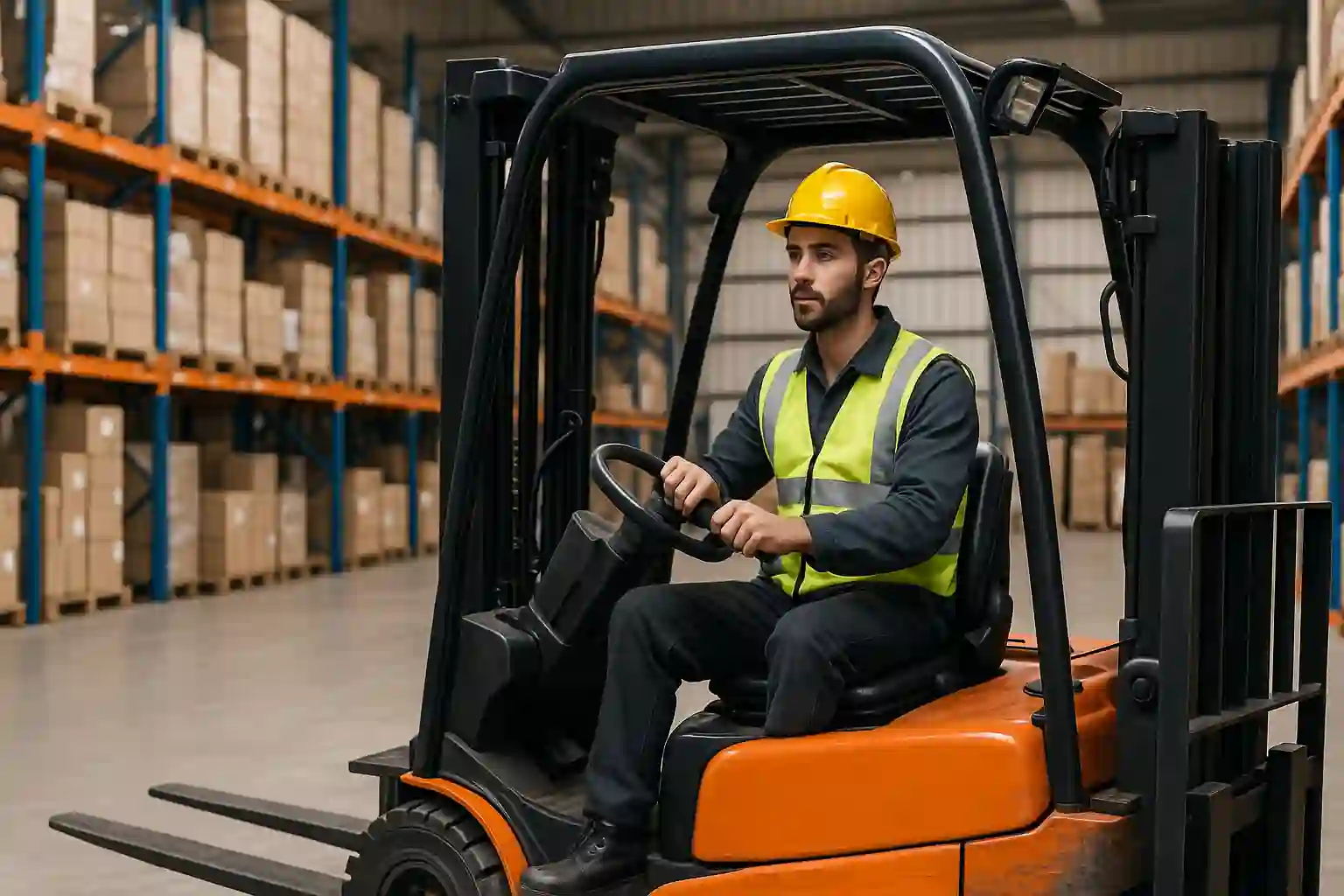
No loose clothing, no baggy jackets, and definitely no dangling items that can get caught in the mast or chains.
Typical PPE includes:
- Safety shoes
- Hi-vis vest
- Fitted workwear
- Gloves (if needed)
- A working seatbelt — yes, ALWAYS wear it
You don’t look cooler with the seatbelt off—you just look like someone who wants to get thrown from the cab during a tip-over.
| PPE Item | Purpose | Notes |
|---|---|---|
| Safety Shoes | Protect feet from falling loads, crush injuries, and punctures. | Use steel or composite toe with slip-resistant soles. |
| Hi-Vis Vest | Makes the operator easy to see around pedestrians and vehicles. | Often mandatory in busy warehouses, docks, and yards. |
| Fitted Work Clothing | Prevents clothing from getting caught in the mast, chains, or controls. | Avoid loose sleeves, scarves, and baggy jackets. |
| Gloves | Protect hands and improve grip when handling loads or controls. | Choose gloves based on the task (grip, cut resistance, cold protection). |
| Seatbelt | Keeps operator inside the protective zone in case of a tip-over. | Should be worn at all times whenever the truck is in use. |
| Hard Hat (where required) | Protects the head from falling objects or low overhead structures. | Common in construction sites, loading bays, and outdoor yards. |
| Safety Glasses | Shields eyes from dust, debris, and splashes. | Recommended in areas with flying particles or chemical exposure. |
4. DO Keep Forks Low While Traveling
This is one of the golden rules.
Fork height while traveling:
➡️ 4 to 6 inches above the ground
Why?
- Better stability
- Lower center of gravity
- Reduced chances of hitting shelves or pallets
- Improved visibility
Traveling with raised forks is one of the fastest ways to lose control, especially when turning.
5. DO Maintain Clear Visibility
If you can’t see where you’re going, you shouldn’t be moving—simple as that.
Tips for better visibility:
- Travel in reverse when carrying tall loads
- Use mirrors
- Slow down at intersections
- Ask for a spotter if needed
- Make sure your lights are working
If visibility is blocked, treat the area like a blind spot. Don’t risk guessing—forklifts aren’t guessing machines.
| Situation | Recommended Fork Height | Reason |
|---|---|---|
| Traveling with No Load | 4–6 inches above the ground | Prevents hitting obstacles while keeping the forklift stable and easy to control. |
| Traveling with a Load | 4–6 inches above the ground, mast slightly tilted back | Ensures load stability, reduces center of gravity, and prevents the load from sliding forward. |
| Approaching a Pallet | Forks level with pallet’s entry height | Allows smooth alignment and entry into pallet openings without damaging the pallet. |
| Lifting a Load | Raise forks just enough to clear pallet before tilting back | Minimizes strain on mast and improves load stability before transport. |
| Parking the Forklift | Forks fully lowered to the ground | Prevents tripping hazards and keeps the forklift in a safe, OSHA-compliant parked state. |
6. DO Manage Your Speed
Speeding on a forklift is a no-win situation. You save maybe two seconds, but risk damaging:
- The load
- The rack
- The forklift
- A coworker
- Yourself
Forklifts don’t stop like cars. They’re heavy, and with a raised load, they’re even harder to control.
Slow down at corners, intersections, and tight aisles. Your supervisor will thank you—and so will your body.
7. DO Keep Loads Stable & Centered
A stable load is a safe load.
Always check:
- Is the heaviest part facing the backrest?
- Is the load centered on both forks?
- Is the mast slightly tilted back?
- Are there any loose, leaning, or unsecured items?
Never lift a load unless you know it’s secure. A shifting pallet can cause chain reactions—broken products, damaged racks, or tip-overs.
THE ESSENTIAL DON’TS OF FORKLIFT OPERATION
Now let’s talk about what you should NEVER do, no matter how rushed or confident you feel.
1. DON’T Operate a Forklift Without Training
Let’s be very clear: Forklifts are not “try it and see what happens” machines.
Untrained operation is illegal, dangerous, and puts everyone at risk.
2. DON’T Drive With Forks Raised Too High
High forks = unstable forklift.
When forks are up:
- Center of gravity shifts
- Machine becomes top-heavy
- Steering responsiveness drops
- Risk of hitting racks or pipes increases
Even empty forks should stay low. Those tips are sharp—nobody wants to get jabbed.
3. DON’T Overload the Forklift
Every forklift has a data plate that shows its maximum capacity. That number isn’t a suggestion—it’s physics.
Overloading can cause:
- Tip-overs
- Broken pallets
- Mast failure
- Loss of control
And remember:
A load that fits doesn’t always mean it’s safe.
4. DON’T Turn Too Fast With a Raised Load
This is the #1 cause of forklift tip-overs.
When turning with a raised load, your forklift acts like a pendulum. A sudden turn can flip the entire machine sideways in just a split second.
Keep the load low. Keep turns slow. Your job isn’t a racing game.
5. DON’T Lift People Without a Proper Man Basket
This happens WAY too often in real warehouses:
“Hey, just lift me up quickly so I can grab that box…”
No.
Unless you have:
- A certified man basket
- A secured locking mechanism
- A trained operator
- Supervisory approval
…you should NEVER lift anyone with the forks.
6. DON’T Leave a Forklift Running and Unattended
According to OSHA, a forklift is considered unattended when the operator:
- Is 25 feet away, or
- Can’t clearly see the forklift
If it’s unattended, you must:
- Lower forks
- Set parking brake
- Turn off power
- Remove key
Never leave the machine idling with forks raised. It’s an accident waiting to happen.
7. DON’T Ignore Strange Noises, Leaks, or Performance Issues
Forklifts may not talk, but they communicate.
If you hear or see something unusual:
- Grinding
- Squeaking
- Jerky lifting
- Leaking hydraulic fluid
- Burning smell
Stop and report it.
A forklift that “feels wrong” usually is wrong.
8. DON’T Take Shortcuts (Even Small Ones)
Shortcuts are harmless—until they’re not.
Examples include:
- Driving too fast to finish early
- Carrying passengers
- Cutting corners in narrow aisles
- Skipping pre-inspection
- Ignoring weight limits
Every “shortcut” eventually becomes a habit, and habits lead to accidents.
Forklift Operation Dos and Don’ts by Country
| Country | Key DOs | Key DON’Ts |
|---|---|---|
| United States (OSHA) | - Get OSHA-compliant training and evaluation - Perform daily inspections - Wear seatbelt always - Travel with forks low |
- Don’t operate untrained - Don’t drive with fork raised - Don’t exceed load capacity - Don’t leave forklift unattended |
| Canada (CSA B335) | - Take CSA-compliant training - Use PPE and inspect daily - Ensure stable loads - Practice safe travel on icy floors |
- Don’t operate without employer evaluation - Don’t lift people improperly - Don’t use phone while driving |
| United Kingdom (HSE L117) | - Complete 3-stage training - Follow site speed limits - Use banksmen when needed - Keep load low and tilted |
- Don’t operate without authorization - Don’t carry passengers - Don’t turn with elevated loads |
| Australia (WorkSafe HRW) | - Obtain LF/LO licence - Perform pre-start checks - Wear mandatory PPE - Follow WHS site rules |
- Don’t operate without HRW licence - Don’t tilt load forward excessively - Don’t move with raised load - Don’t drive on unsafe surfaces |
Forklift Safety Myths You Should Stop Believing
| Myth | Reality | Why It’s Wrong |
|---|---|---|
| “Seatbelts aren’t necessary because forklifts have overhead guards.” | Seatbelts keep you inside the operator zone, especially during tip-overs. | Most deaths occur when operators are thrown out or crushed, not from falling objects. |
| “Driving fast makes me more productive.” | Controlled driving is safer and prevents damage, delays, and accidents. | Accidents and load spills cost far more time than slow, safe driving. |
| “I’ve been driving for years—I don’t need refresher training.” | Refresher training keeps skills sharp and corrects bad habits. | Work environments change, and old habits can become unsafe over time. |
| “If the load fits on the forks, it’s safe to lift.” | Load weight, center of gravity, and stability matter more than size. | An oversized or poorly balanced load can cause tip-overs and load shifts. |
| “I don’t need to inspect the forklift; it worked fine yesterday.” | Daily inspections catch leaks, cracks, and mechanical issues early. | Small problems can quickly turn into dangerous failures if ignored. |
| “Looking forward is enough—I don’t need to reverse.” | When the load blocks visibility, reversing is the only safe option. | Driving blind leads to collisions with racks, pedestrians, and equipment. |
Real-World Scenarios: What Happens When You Ignore the Rules
Here’s what I’ve seen over the years:
Scenario 1: Turning with raised forks
Operator turned slightly too fast, pallet shifted, forklift tipped sideways. Nobody hurt, but the rack took heavy damage.
Scenario 2: Skipping pre-inspection
A forklift with a leaking hydraulic hose failed mid-lift. The load dropped inches away from someone walking by.
Scenario 3: Driving too fast in a blind corner
Forklift clipped a coworker’s pallet jack. Both were fine, but the crash shook everyone.
None of these accidents were caused by “complex” errors.
They all came from ignoring the dos and don’ts.
Quick Forklift Dos and Don’ts Checklist
DOs:
✔ Conduct daily inspections
✔ Keep forks low while traveling
✔ Wear PPE and seatbelt
✔ Follow load limits
✔ Drive at safe speeds
✔ Maintain clear visibility
✔ Follow warehouse traffic rules
DON’Ts:
✘ Don’t drive with forks raised
✘ Don’t overload
✘ Don’t take shortcuts
✘ Don’t lift people without proper equipment
✘ Don’t turn too fast
✘ Don’t ignore machine problems
✘ Don’t leave the forklift unattended
Conclusion: Safe Operation Comes Down to Habits
There’s no magic secret to being a great forklift operator. You don’t need superhuman reflexes or decades of experience. You just need to:
- Respect the forklift
- Follow the basics
- Build safe habits
- Stick to the dos and don’ts
Once these become second nature, you’ll operate safely, confidently, and professionally—every single shift.