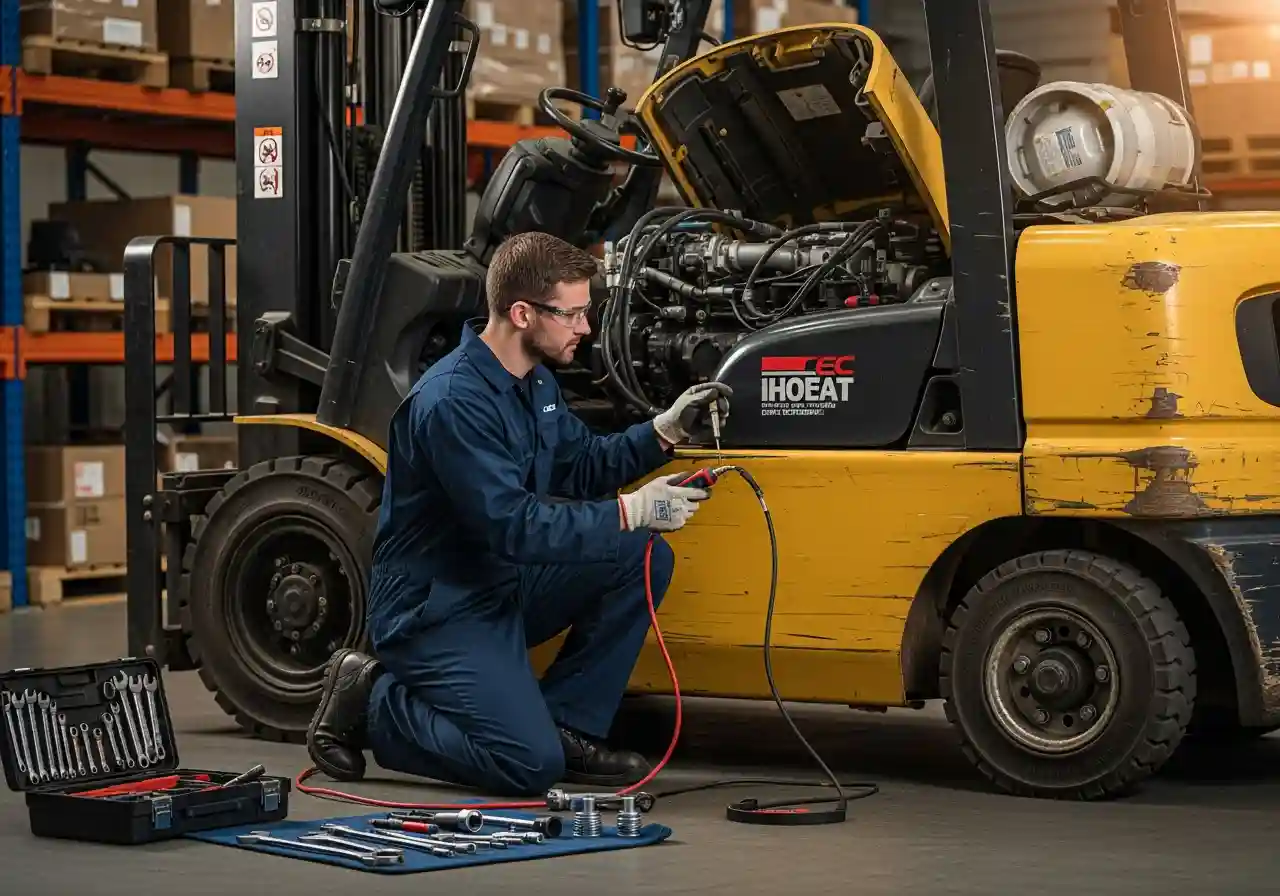
Forklift repairs can get expensive fast — and if you’ve owned a lift truck for a while, you already know it’s not like fixing a regular car. One bad hydraulic leak, a worn mast chain, or a dying battery can turn into a surprise bill that hits the budget hard.
So how much does forklift repair actually cost? The short answer: it depends on the type of forklift you have, the parts that need fixing, and how quickly you need it back on the floor. Some repairs are cheap and quick… others can cost as much as buying a used forklift.
In this guide, we’ll break down the typical repair prices, the most common fixes, what affects the cost, and how to avoid those big “uh-oh” repair bills in the first place.
Common Forklift Repair Costs (By Component)
| Forklift Component / Repair | Typical Cost Range | Labor Hours | Notes |
|---|---|---|---|
| Hydraulic pump replacement | $1,000–$3,500 | 3–6 hrs | Major repair, depends on brand |
| Lift cylinder rebuild | $500–$1,200 | 2–4 hrs | Often needed on older trucks |
| Mast chain replacement | $300–$600 | 1–2 hrs | Chains should be replaced in pairs |
| Starter replacement | $250–$600 | 1–2 hrs | Common on older models |
| Alternator replacement | $300–$700 | 1–2 hrs | Part cost varies by brand |
| Battery replacement (electric) | $2,000–$7,000 | 1–2 hrs | Big cost factor for electric forklifts |
| Tire replacement (solid/pneumatic) | $150–$400 per tire | 0.5–1 hr | Press-ons cost more |
| Brake system repair | $300–$1,000 | 2–4 hrs | Depends on drums, shoes, cylinders |
| Steering system repair | $400–$1,500 | 2–4 hrs | Axle & linkage wear is common |
| Engine overhaul (IC forklifts) | $3,000–$8,000 | 10–20 hrs | Major downtime expected |
Cost Comparison: Electric vs. Propane vs. Diesel Forklifts
| Forklift Type | Low-Cost Repairs | High-Cost Repairs | Maintenance Trend |
|---|---|---|---|
| Electric | $150–$300 | $3,000–$7,000 (battery) | Fewer moving parts, expensive battery issues |
| Propane (LPG) | $200–$500 | $1,000–$3,000 (engine) | Mid-range cost, common fuel system issues |
| Diesel | $300–$700 | $2,000–$8,000 (engine) | Tough machines, pricey engine & injector repairs |
Scheduled Maintenance Cost Breakdown
| PM Service Type | What’s Included | Typical Cost | Recommended Interval |
|---|---|---|---|
| Basic PM | Oil, filters, inspection | $150–$250 | Every 250 hours |
| Full PM | Fluids, filters, adjustments | $300–$500 | Every 500 hours |
| Comprehensive PM | Full inspection + wear parts | $500–$900 | Annually or 1,000 hours |
Forklift Repair Labor Rates (By Region)
| Region | Typical Labor Rate / Hour | Service Call Fee |
|---|---|---|
| West Coast | $150–$185/hr | $125–$175 |
| Midwest | $120–$160/hr | $85–$150 |
| East Coast | $140–$180/hr | $120–$170 |
| Southern U.S. | $110–$150/hr | $80–$150 |
Hidden Costs Most People Forget About
A lot of businesses focus only on the repair bill, but the real cost of a broken forklift includes:
- Renting a replacement forklift - $500–$1,200 per week, depending on the lift.
- Lost productivity - When your main lift is down, everything moves slower.
- Delayed shipments - Deadlines get missed, and stress levels go up.
- Repeat repairs - If you ignore small issues, they come back bigger.
So yeah… the repair bill is only part of the story.
How to Save on Forklift Repair Costs (Without Losing Your Mind)
Let’s be real — forklift repairs can get pricey. One day it’s “just a weird noise,” and the next thing you know, you’re staring at a repair bill that feels like a down payment on a car.
The good news? You can keep those costs way lower with a few simple habits. Here’s the easy, real-world way to save money on forklift repairs.
1. Stay on top of preventive maintenance
Honestly, skipping PMs is like skipping oil changes on your car — it will come back to haunt you. Regular PMs catch the little stuff before it becomes the big, expensive stuff.
Think loose chains, low fluids, filters that should’ve been replaced 3 months ago… you get the idea.
2. Make sure your operators know what to look for
Operators are the first ones to notice when something feels “off.” A quick bit of training helps them spot:
- Weird noises
- Slow lifting
- Warning lights
- Worn tires or chains
Catch it early, fix it cheap. Ignore it, pay big later.
3. Do daily inspections (and actually take them seriously)
Yeah, the pre-shift checklist seems boring — until you realize it saves you from breakdowns. A 2-minute walk-around catches leaks, dead lights, brake issues, cracked hoses… all the stuff that’s cheap to fix now and expensive to fix later.
4. Don’t run the forklift until it dies
“Run-to-failure” is basically code for “prepare your wallet.” When things break during a shift, you’re stuck paying:
- Emergency labor rates
- Rush parts
- Rental fees for a backup forklift
Planned repairs are always cheaper than surprise repairs.
5. Replace cheap wear parts before they become a problem
Some parts are inexpensive — until they fail and damage everything around them.
Think:
- Mast chains
- Forks
- Tires
- Brake shoes
Spend $150 now or $1,500 later. Your choice.
6. Aftermarket parts = huge savings
OEM parts are great, but you don’t always need them.
Things like filters, tires, and chains? Aftermarket is usually just as good and way cheaper.
7. Keep the forklift clean
Dust and grease do more damage than people realize. A clean forklift runs cooler, works better, and breaks down less. It’s also easier to spot leaks when everything isn’t covered in dirt.
8. Don’t ignore hydraulic leaks
A little drip always turns into a big bill.
A $60 hose today can prevent a $3,000 pump replacement tomorrow.
9. Fix multiple issues in one visit
Service call fees add up fast. If the tech is already on-site, let them knock out everything at once. One visit = one fee.
10. Compare dealers vs independent shops
Dealers are great, but independents often have:
- Cheaper labor
- Faster scheduling
- Lower service call rates
Getting a second quote doesn’t hurt.
11. Keep repair history (trust me, it helps)
Tracking repairs shows you patterns — like a part that keeps failing or a forklift that eats money every month. Sometimes replacing the whole unit is cheaper than keeping it on life support.
12. Know when to say goodbye
If a forklift is costing you half its value in repairs every year, it’s probably time to move on. Sometimes the cheapest repair is… not repairing at all.
When Is It Better to Replace Instead of Repair? (Let’s Be Honest Here)
Every forklift eventually reaches that point where fixing it starts to feel like a never-ending cycle. You repair one thing… then two weeks later something else breaks… then a month later you're calling the technician again. If your forklift keeps showing up on the repair schedule like it has a VIP membership, it might be time to admit the truth: it’s becoming more costly to keep it than to replace it.
Here’s how to know when you’ve hit that point.
1. The 50% Rule (The Easiest Way to Decide)
This rule is simple and brutally honest:
👉 If your repair costs add up to 50% of the forklift’s current value within a year, it’s usually smarter to replace it.
Why?
Because sinking thousands into a machine that’s already near the end of its lifespan rarely pays off. That money could go into a newer forklift that runs smoother, breaks less, and doesn’t give you heart palpitations every time it starts making a new noise.
It’s the same logic as fixing an old car. Sure, you can keep repairing it… but should you?
2. The Hours Don’t Lie: 10,000–15,000+ Hours
Forklifts age by hours, not years. And once a lift hits 10,000+ hours, the real wear and tear starts showing.
Here’s the breakdown:
- At 8,000–10,000 hours, expect medium repairs.
- At 10,000–12,000 hours, expect major repairs.
- At 15,000+ hours, expect “just replace it” territory unless it’s been babied its whole life.
High-hour forklifts wear out:
- engines
- transmissions
- hydraulic pumps
- cylinders
- electrical systems
- masts and chains
Once these big-ticket items start failing, repairs get expensive fast.
3. Parts Are Getting Harder to Find
This one sneaks up on people.
If your forklift is older, discontinued, or a brand that isn’t common in your area, parts start to get:
- harder to find
- slower to arrive
- more expensive
And when parts take 2–3 weeks to ship, you’re not just paying for the repair—you’re paying for:
- downtime
- rental forklifts
- delayed work
At that point, the forklift is costing you money even when it’s not being repaired.
4. You’re Fixing the Same Problem Over and Over
This is a huge red flag.
If you’ve repaired the same part:
- twice
- or even three times
…it means something deeper is going on. Maybe it’s worn-out components around it, maybe it’s age, maybe it’s overall machine fatigue. But repeating repairs is a sign the forklift is entering the “death by a thousand cuts” phase.
And those cuts are expensive.
5. The Forklift Is Affecting Productivity
Sometimes it’s not the repair cost itself—it’s what the downtime does to your operation.
If the forklift is constantly:
- slowing down
- losing power
- overheating
- leaking
- refusing to start on cold mornings
- or needing “just one more repair”
…it’s hurting your workflow more than you realize.
A sluggish forklift can cost more in lost time than the repair bill ever shows.
6. You’re Renting a Replacement Forklift Too Often
Short-term rentals add up fast.
If you’re renting a forklift:
- multiple weeks per year
- or every time yours breaks down
…that extra cost should be factored into your decision.
When the rental fees + repair costs start approaching the price of a newer, more reliable forklift… well, the decision becomes obvious.
7. The Forklift Has Become “Unpredictable”
Every experienced forklift owner knows that forklift—the one nobody wants to drive because it's become unpredictable. Some days it works. Some days it doesn’t. Some days it decides to test your patience.
An unreliable forklift is more than a cost issue—it’s a safety hazard.
If you don’t trust it anymore, replace it.
Final Thoughts
Forklift repair costs can be unpredictable, but they don’t have to destroy your budget. When you understand what things actually cost—and why—you can make smarter decisions, plan ahead, and avoid those sudden “why is this bill so high?” moments.
The biggest secret? Small problems are cheap. Big ignored problems are expensive. If you stay on top of maintenance, train your operators well, and don’t wait until something fails, you’ll keep your forklifts running longer and your repair bills way lower.